
Mobisaria is a halal-first digital platform designed to serve the growing needs of Muslim users preparing for Hajj and Umrah. By integrating Shariah-compliant travel services, ethical finance, gamified Islamic education, and transparent charity tools, Mobisaria offers a unified solution powered by the MOBISARIA utility token. In a market underserved by traditional platforms yet rich in spiritual and economic demand, Mobisaria bridges faith and technology to support a more trusted and accessible pilgrimage journey.
A key pillar of Muslim life is the pilgrimage to Makkah. Every year, millions of Muslims perform Hajj, the once-in-a-lifetime obligation, or Umrah, a voluntary act of worship that can be performed at any time of the year. In 2024 the number of Hajj performers was estimated at 1.8M, and the number of Umrah performers was estimated to 36M.
This concentrated and deeply spiritual movement of millions of Muslims each year has a significant ripple effect across multiple industries: tourism, finance, transportation, and digital services. As the global Muslim population continues to grow, so does the demand for products and infrastructure that align with Islamic values. The pilgrimage sector, in particular, stands out as both a spiritual cornerstone and a powerful driver of economic activity in the Muslim world.
Indonesia: Large Muslim Nation with Untapped Potential
Islam is the dominant faith and religious observance is an integral part of national identity in Indonesia. This country is home to over 240M Muslims, representing 87% of its population — making it the largest Muslim-majority country in the world.
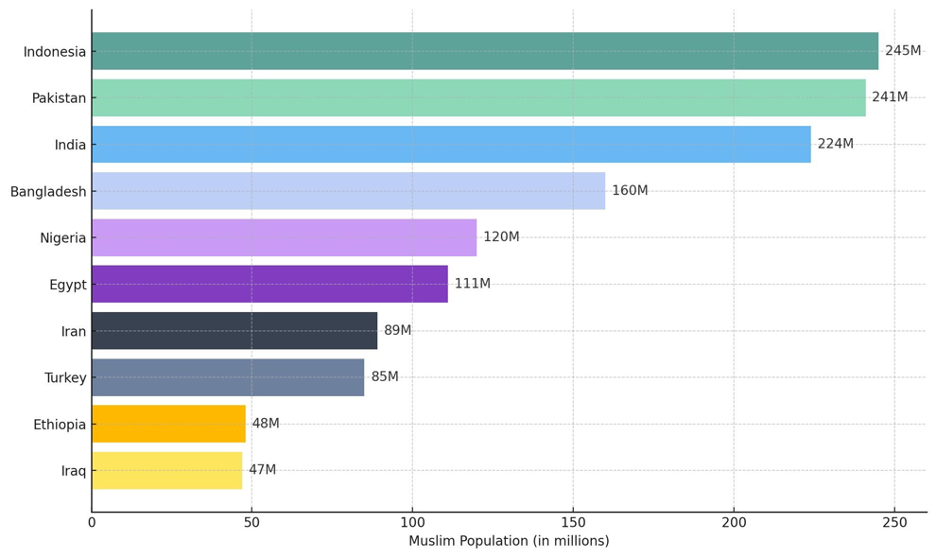
However, despite this enormous potential, Indonesian Muslims — particularly those seeking to perform Hajj and Umrah — face a range of persistent challenges.This large and growing community is underserved in key areas that are essential to their spiritual journey.
Key Challenges
Despite Indonesia’s position as a global leader in the Muslim world, the path to Hajj and Umrah remains complex for many of its citizens. Millions of Indonesian Muslims face organizational, logistical, and ethical challenges that hinder their ability to fully prepare for and complete the pilgrimage. These challenges span across several critical areas:
- Fragmented Planning: Pilgrims juggle multiple providers, causing confusion and service gaps.
- Trustworthy Financial Services: Lack of Shariah-compliant platforms that are merged with managing pilgrimage-related expenses.
- Lack of Localized Learning: Insufficient access to localized, structured and engaging learning content.
- Charity Transparency: Donors face difficulties in finding accountable, traceable and Shariah-compliant charity channels.
Fragmented Planning
While countries like Saudi Arabia have developed comprehensive digital platforms and government-regulated systems to manage and support Hajj and Umrah pilgrims — including booking, visa processing, navigation, and emergency services — Indonesia’s pilgrimage market remains largely decentralized and commercially fragmented.
Pilgrims in Indonesia must navigate a web of independent travel operators, local religious offices, and informal channels to organize their journey. This opens the door to inconsistencies in service quality and makes the pilgrimage planning process more difficult for many users. As a result, millions of Indonesian Muslims are left without a unified, trusted platform that can simplify and secure their spiritual journey.
Trustworthy Financial Services
In addition to logistical challenges, Indonesian pilgrims often face difficulties accessing reliable halal financial services to help them save and pay for their journey in a Shariah-compliant manner. While the halal fintech sector is beginning to emerge in Indonesia, there remains a lack of integrated platforms that combine ethical finance with verified travel services.
This issue is particularly acute in rural regions, where many users remain unbanked or underbanked, and access to formal financial institutions is limited. In such cases, blockchain-based payment solutions offer a promising alternative, enabling secure, transparent transactions without the need for conventional banking infrastructure.
Additionally, the inconvenience of dealing with multiple currencies — especially when booking international services — adds friction to the user experience. A unified, halal digital payment ecosystem would reduce complexity, increase trust, and improve financial accessibility for millions of prospective pilgrims across the country.
Lack of Localized Learning
In Indonesia, faith is traditionally passed down from generation to generation, forming a vital part of both family life and national identity. The country is now home to a predominantly young population, with over 65% under the age of 40. This new generation of Muslims engages with information and learning in very different ways than previous ones.
To effectively support their religious growth educational formats must evolve. Today’s learners need content that is not only accurate and structured, but also digitally accessible, interactive, and engaging. Unfortunately, there is still a significant shortage of such resources, particularly high-quality, gamified Islamic education in Bahasa Indonesia.
This gap presents both a cultural responsibility and a strategic opportunity: the development of faith-based digital learning experiences tailored to the habits and expectations of younger Indonesian Muslims.
Charity Transparency
Charitable giving is a core part of the Hajj and Umrah experience, with many pilgrims choosing to give zakat, sadaqah, or other forms of donation before, during, or after their journey. However, truly transparent and traceable charity channels remain limited, especially within digital ecosystems. Donors often lack visibility into how their contributions are used, whether funds are reaching verified causes, or if the process adheres to Islamic ethical standards.
This lack of clarity can lead to hesitation or reduced participation in charitable acts — not because of unwillingness, but due to a lack of trust. As digital platforms become more common in religious life, there is growing demand for systems that offer accountability, transparency, and clear reporting, ensuring that every donation fulfills both its intended social and spiritual impact.
A Solution Whose Time Has Come
Given the scale and variety of challenges Indonesian Muslims face on their path to Hajj and Umrah — from fragmented travel infrastructure and limited halal financial tools, to a lack of engaging educational resources and transparent charity systems — the need for a comprehensive solution
A holistic, halal-by-design digital platform that brings together verified pilgrimage services, Shariah-compliant finance, modern Islamic education, and trustworthy donation tools is no longer just a good idea — it’s an essential step forward. In a market this large, underserved, and spiritually motivated, such a platform isn’t just relevant — it’s inevitable.
Platform
Our Mission
Mobisaria honors the deeply rooted spiritual aspirations of Indonesian Muslims by simplifying and safeguarding their path to Hajj and Umrah. In a country where pilgrimage marks a spiritual milestone for millions, the journey is too often burdened by uncertainty, poor coordination, and limited access to trustworthy, Shariah-compliant services.
Mobisaria’s mission is to bring clarity, trust and ethical integrity to this process. By leveraging digital tools grounded in Islamic values, the platform offers a simple and transparent experience for the pilgrims — from the moment they begin planning to the moment they step into Makkah. Our goal is to ensure that every stage of the sacred journey is guided with dignity, confidence, and ease.
Benefits
- Centralized Planning & Services: By centralizing services in a single platform, Mobisaria eliminates the need to navigate multiple agents, providers and payment systems. This streamlining reduces confusion and risk, making Hajj and Umrah planning more accessible — especially for first-time pilgrims.
- Ethical Assurance & Compliance: Mobisaria offers Indonesian Muslims a secure and ethically grounded environment for preparing and completing their pilgrimage. Every service — from Hajj and Umrah bookings to charitable giving — is verified for halal compliance, giving users confidence that their actions align with their faith.
- Engaging Islamic Learning: Mobisaria offers Islamic educational content and user experiences entirely in Bahasa Indonesia, making the platform immediately accessible. Instead of relying on dense, text-heavy materials, Mobisaria uses gamified, interactive formats — a natural fit for Indonesia’s young, mobile-native generation.
- Transparency & Traceability: From travel services to charity donations, all transactions on Mobisaria are tracked via blockchain for maximum transparency. Pilgrims can view a clear history of their bookings, charitable impact within their personal dashboard.
Features
- Halal-certified Travel Services: Users can browse, book and pay for verified Hajj and Umrah packages, accommodation, food and transport — directly through the Mobisaria platform. Each provider is screened for Shariah compliance and service quality.
- Charity Donation & Tracker: Users can contribute to zakat and sadaqah campaigns using MOBISARIA tokens, with each donation recorded on-chain. A built-in tracker shows how and where funds were used, reinforcing trust and encouraging consistent giving.
- Gamified Islamic Education: Mobisaria offers interactive, reward-based learning modules to help users prepare spiritually for pilgrimage and expand their Islamic knowledge.
- Simplified Digital Journey: With the Mobisaria platform users no longer need to navigate currency exchanges or complex payment systems. The token functions as a universal, halal-native currency that simplifies transactions and removes barriers.